
Medical Spa Practice Growth Strategies
Growing a medical spa requires more than promoting treatments or generating new inquiries. It takes a coordinated strategy that attracts the right clients, builds confidence in your providers, encourages repeat visits, and creates lasting relationships.
Whether your medical spa specializes in injectables, laser treatments, skin rejuvenation, body contouring, or a combination of aesthetic services, sustainable growth depends on delivering a consistent experience from initial discovery through consultation, treatment, and ongoing engagement.
MVotion helps medical spas identify growth opportunities and connect strategy, technology, execution, and measurement through a coordinated Practice Growth Platform.

Understanding the Medical Spa Growth Opportunity
Medical spas operate in a highly visual, relationship-driven segment of healthcare and aesthetics.
Prospective clients often research treatments, compare providers, review before-and-after photographs, evaluate online reviews, and consider pricing before scheduling a consultation or appointment.
Unlike some healthcare services driven by immediate medical needs, many aesthetic treatments are elective. Clients may take time to evaluate their options, and their decisions can be influenced by provider credentials, treatment education, convenience, and confidence in the practice.
At the same time, many medical spa services create opportunities for ongoing relationships through maintenance treatments, skincare programs, and recurring appointments.
Successful medical spa growth strategies recognize the importance of both attracting new clients and maintaining relationships with existing ones.
A coordinated growth strategy helps medical spas:
- Improve local visibility for priority treatments and services.
- Build trust through provider expertise, authentic reviews, and educational content.
- Convert qualified inquiries into consultations and appointments.
- Encourage appropriate repeat visits and ongoing client engagement.
- Strengthen retention through consistent communication and personalized experiences.
- Understand which marketing activities contribute to appointments, retention, and revenue.
Common Growth Challenges for Medical Spas
Competing in a Crowded Local Aesthetic Market
Medical spas may compete with dermatology practices, plastic surgery offices, aesthetic clinics, and other med spas offering similar treatments.
Standing out requires more than attractive branding. Practices need clear positioning, strong local search visibility, differentiated service information, and a credible reputation.
Converting Treatment Interest into Appointments
Prospective clients frequently compare treatment options, providers, pricing, and expected outcomes before booking.
Unclear service descriptions, complicated scheduling, limited provider information, or slow responses can create unnecessary barriers between interest and an appointment.
Building Repeat Visits and Client Loyalty
Many aesthetic services involve maintenance schedules or complementary treatments.
Without organized follow-up, appropriate reminders, and ongoing engagement, medical spas may struggle to maintain consistent client relationships and appointment frequency.
Managing Marketing, Communication, and Operations
Medical spas often rely on multiple systems for websites, appointment requests, marketing campaigns, client communication, reviews, and reporting.
Disconnected tools and inconsistent workflows can create administrative inefficiencies and make it difficult to understand the complete client journey.
Six Capabilities That Support Medical Spa Growth
Your website and digital infrastructure should make it easy for prospective clients to explore treatments, evaluate providers, and schedule their next step.
A strong foundation includes:
- Mobile-friendly website design and intuitive navigation.
- Dedicated pages for priority treatments and services.
- Clear provider credentials and treatment information.
- Appropriately consented before-and-after galleries.
- Convenient consultation and appointment request pathways.
- Connected communication, client management, and reporting systems.
The objective is to create a consistent digital experience that builds confidence and supports conversion.
Effective client acquisition begins with understanding which treatments the medical spa wants to grow, who is most likely to seek them, and how prospective clients research local providers.
Opportunities may include:
- Local SEO and Google Business Profile optimization.
- Treatment-specific search engine optimization.
- Educational content addressing common client questions.
- Targeted digital advertising where appropriate.
- Dedicated landing pages for priority services.
- Website and booking conversion improvements.
The goal is not simply more website traffic. It is attracting prospective clients whose interests align with the medical spa's services, expertise, and appointment capacity.
Aesthetic clients may return for maintenance treatments, complementary services, skincare consultations, or ongoing treatment plans.
Thoughtful communication can help maintain these relationships while improving the client experience.
Appropriate strategies may include:
- Appointment reminders and follow-up communications.
- Treatment education and aftercare information.
- Maintenance reminders when clinically appropriate.
- Client newsletters and service updates.
- Reactivation outreach to inactive clients.
- Membership and loyalty communications where appropriate.
Engagement should reflect client preferences, clinical guidance, consent requirements, and applicable privacy rules.
A medical spa's reputation can strongly influence prospective clients evaluating aesthetic treatments.
Provider qualifications, authentic patient experiences, online reviews, treatment information, and appropriately presented results all contribute to credibility.
A coordinated reputation strategy helps practices encourage genuine feedback, monitor reviews, respond appropriately, and maintain consistent business information across digital channels.
Referral initiatives can also help satisfied clients introduce others to the practice, provided incentives and promotional practices comply with applicable rules.
Medical spas often manage inquiries, consultation requests, appointment reminders, follow-up communications, and promotional campaigns across multiple channels.
Well-designed automation can help improve responsiveness and reduce repetitive administrative work.
Examples include:
- New inquiry notifications and lead routing.
- Missed-call text-back workflows.
- Consultation and appointment reminders.
- Follow-up task management.
- Appropriate client reactivation campaigns.
- Membership and recurring appointment communications.
- Internal workflow notifications.
Automation should support staff and provider relationships rather than replace individualized clinical communication.
Medical spa growth should be evaluated through both new client acquisition and the value of ongoing client relationships.
Useful performance measures may include:
- Qualified treatment inquiries.
- Scheduled consultations and appointments.
- Consultation-to-treatment conversion.
- Repeat appointment rates.
- Client retention and reactivation.
- Membership participation and retention.
- Client acquisition costs.
- Marketing contribution to revenue.
Connecting marketing performance to actual business outcomes helps medical spa leaders make more informed decisions about growth investments.
Different Services Require Different Growth Strategies

Injectables & Facial Aesthetics
Clients researching neuromodulators, dermal fillers, and other injectable treatments often prioritize provider qualifications, safety, natural-looking outcomes, and treatment experience.
Growth strategies should emphasize credible provider information, clear treatment education, realistic expectations, and convenient consultation pathways.
Ongoing engagement may also support appropriate maintenance appointments and long-term client relationships.
Laser & Skin Rejuvenation Treatments
Clients considering laser resurfacing, hair removal, photofacials, microneedling, and other skin treatments may compare technologies, treatment plans, recovery expectations, and provider experience.
Educational content, service-specific search visibility, and clear explanations of treatment suitability can help clients make informed decisions.
Practices may also benefit from organized communication for multi-session treatment plans.
Body Contouring & Wellness Services
Clients exploring body contouring and other aesthetic or wellness-oriented services may have questions about treatment options, eligibility, expected results, and ongoing care.
Growth strategies should prioritize accurate information, appropriate expectations, provider credibility, and consultation pathways that help determine whether a service is suitable.
Marketing claims should remain consistent with applicable medical, advertising, and regulatory requirements.
Explore Medical Spa Growth Opportunities by Market
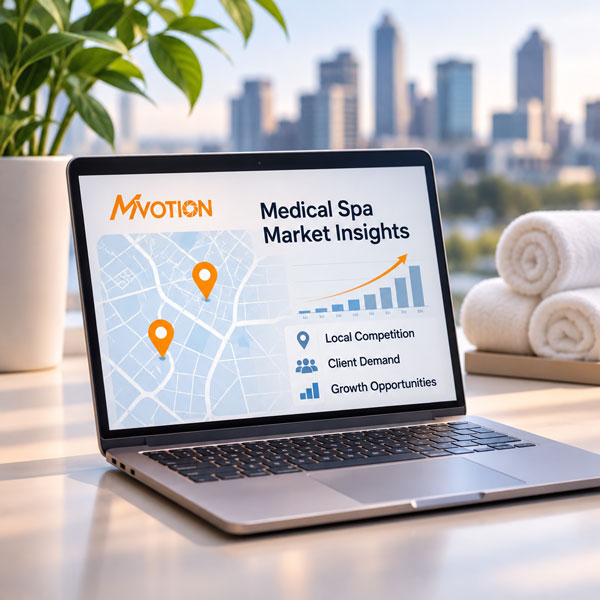
Medical spas operate in different competitive environments. Local demographics, treatment demand, provider availability, pricing strategies, and geographic reach can influence growth opportunities.
MVotion's market-specific resources examine these factors to help practices better understand their competitive position and identify areas for improvement.
Medical Spa Marketing in Atlanta, Georgia
Explore opportunities to improve local visibility, strengthen treatment-specific positioning, attract qualified consultations, and develop lasting client relationships in the Atlanta metropolitan area.
Medical Spa Marketing in Tampa, Florida
Discover strategies for increasing treatment awareness, improving appointment conversion, strengthening reputation, and supporting repeat business in the Tampa market.
Frequently Asked Questions
Practice Growth Assessment
Growth Begins with Understanding Your Practice
Every practice has different strengths, challenges, and opportunities. Before recommending solutions, MVotion begins by understanding where your practice stands today.
Our Practice Growth Assessment evaluates your current digital position, identifies potential growth barriers, and highlights opportunities to improve patient acquisition, engagement, and marketing performance.