
Plastic Surgery Practice Growth Strategies
Growing a plastic surgery practice requires more than generating website traffic or advertising inquiries. It takes a coordinated strategy that builds surgeon credibility, attracts prospective patients interested in your services, and guides them from initial research through consultation and follow-up.
Whether your practice specializes in aesthetic surgery, reconstructive procedures, or a combination of services, sustainable growth depends on reaching the right patients, creating a trustworthy experience, and converting qualified interest into meaningful opportunities.
MVotion helps plastic surgery practices identify growth barriers and connect strategy, technology, execution, and measurement through a coordinated Practice Growth Platform.

Understanding the Plastic Surgery Growth Opportunity
Plastic surgery patients often follow a complex decision-making process.
Someone considering an elective procedure may spend weeks or months researching treatment options, evaluating surgeons, comparing before-and-after photographs, reading patient reviews, and considering recovery expectations before scheduling a consultation.
Patients seeking reconstructive procedures may have different priorities, including medical necessity, insurance considerations, referrals, surgeon expertise, and access to appropriate care.
Successful plastic surgery marketing recognizes these differences and builds a digital experience that supports informed decisions rather than simply encouraging inquiries.
A coordinated growth strategy helps practices:
-
Improve visibility for priority surgical and nonsurgical procedures.
-
Strengthen trust through surgeon credentials, experience, and educational content.
-
Convert qualified website visitors into consultation opportunities.
-
Maintain appropriate communication throughout longer patient decision cycles.
-
Understand which marketing investments contribute to consultations and practice growth.
Common Growth Challenges for Plastic Surgery Practices
Competing for Procedure-Specific Visibility
Prospective patients frequently search for individual procedures, compare surgeons, and explore treatment options before contacting a practice.
Without strong procedure pages, relevant educational content, and effective local search visibility, practices may miss opportunities to connect with patients actively considering their services.
Establishing Trust Before the Consultation
Choosing a plastic surgeon is a significant personal decision.
Patients often evaluate surgeon qualifications, clinical experience, facility information, safety practices, authentic reviews, and appropriately presented before-and-after results.
A website must communicate expertise and credibility without exaggerated claims or unrealistic promises.
Converting Interest into Qualified Consultations
Not every website visitor is ready to schedule a consultation.
Some patients are gathering information, comparing options, or exploring potential costs and recovery considerations.
Unclear calls to action, difficult forms, limited information, or delayed inquiry responses can create barriers that prevent qualified prospects from moving forward.
Managing Longer Patient Decision Cycles
Elective procedures often involve substantial consideration and multiple interactions before a patient decides to proceed.
Without organized inquiry management, timely responses, and appropriate follow-up, practices may lose opportunities or struggle to understand which marketing activities lead to consultations.
Six Capabilities That Support Plastic Surgery Practice Growth
Your website and digital infrastructure should help prospective patients understand your expertise, explore procedures, and confidently request a consultation.
A strong foundation includes:
- Mobile-friendly design and intuitive navigation.
- Dedicated pages for priority procedures.
- Clear surgeon credentials and professional biographies.
- Appropriately consented before-and-after galleries.
- Convenient consultation request pathways.
- Connected inquiry management and performance tracking.
The objective is to create a trustworthy digital experience that supports patient research and reduces unnecessary friction.
Effective patient acquisition begins with understanding which procedures the practice wants to grow, the audiences most likely to seek them, and the geographic markets the practice serves.
Opportunities may include:
- Procedure-specific search engine optimization.
- Local SEO and Google Business Profile optimization.
- Educational content addressing patient questions.
- Targeted advertising where appropriate.
- Dedicated landing pages and conversion improvements.
The goal is not simply more inquiries. It is attracting prospective patients whose interests align with the practice's services, expertise, and capacity.
Plastic surgery patients may require more information and reassurance before making a consultation decision.
Thoughtful communication can help practices remain responsive and supportive throughout this process.
Appropriate strategies may include consultation reminders, educational email sequences, inquiry follow-up, postoperative communication, and ongoing patient relationship programs.
Communication should respect patient preferences, privacy, and the individualized nature of surgical care.
A plastic surgeon's reputation plays an important role in patient decision-making.
Prospective patients may consider professional qualifications, experience, patient feedback, and recommendations from trusted sources.
A coordinated reputation strategy helps practices encourage authentic reviews, monitor feedback, respond appropriately, and maintain consistent information across digital channels.
Professional referrals and relationships with other healthcare providers may also contribute to sustainable practice growth.
Plastic surgery practices manage consultation requests, procedure questions, scheduling communications, and follow-up across multiple channels.
Well-designed automation can support timely responses and more consistent administrative workflows.
Examples include:
- Inquiry notifications and lead routing.
- Missed-call follow-up.
- Consultation reminders.
- Follow-up task management.
- Appropriate educational communication.
- Pipeline reporting for consultation opportunities.
Automation should support staff and patient communication, not replace individualized clinical advice or decision-making.
Practice growth requires visibility into what happens after a prospective patient discovers your practice.
Useful performance measures may include:
- Qualified consultation inquiries.
- Scheduled consultations.
- Consultation attendance.
- Consultation-to-procedure conversion.
- Patient acquisition costs.
- Campaign and procedure-level performance.
- Marketing contribution to practice revenue.
Connecting marketing activity to actual consultation and practice outcomes helps leaders make more informed investment decisions.
Different Procedures Require Different Growth Strategies
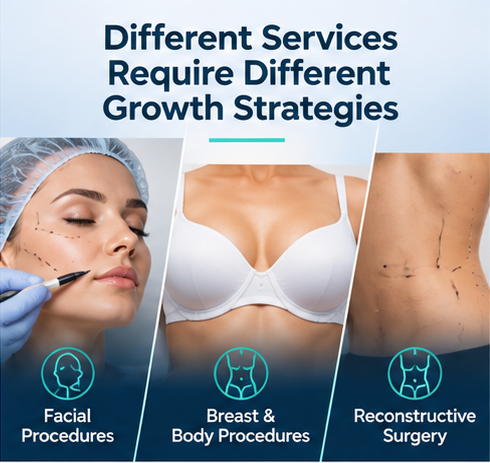
Facial Plastic Surgery
Patients researching facelifts, eyelid surgery, rhinoplasty, and other facial procedures often place significant emphasis on surgeon expertise, aesthetic approach, safety, and realistic outcomes.
Marketing strategies should provide detailed educational content, clear surgeon credentials, and appropriately presented examples of results.
Breast & Body Procedures
Patients considering breast augmentation, breast reduction, abdominoplasty, liposuction, or body contouring may compare procedure options, recovery expectations, surgeon experience, and consultation processes.
Growth strategies should help patients understand available services and make informed decisions about whether a consultation is appropriate.
Reconstructive Plastic Surgery
Patients seeking reconstructive care may have different priorities, including clinical needs, referrals, insurance participation, surgical expertise, and continuity of care.
Marketing and communication should emphasize accurate service information, provider qualifications, access to care, and coordination with referring healthcare professionals.
Explore Plastic Surgery Growth Opportunities by Market
Plastic surgery practices operate in different competitive environments. Local provider availability, procedure demand, surgeon specialization, geographic reach, and patient expectations can influence growth opportunities.
MVotion's market-specific resources examine these factors to help practices better understand their competitive position and identify areas for improvement.
Plastic Surgery Marketing in Atlanta, Georgia
Explore opportunities to strengthen surgeon visibility, attract qualified consultations, and improve competitive positioning in the Atlanta metropolitan area.
Plastic Surgery Marketing in Tampa, Florida
Discover strategies for procedure-specific patient acquisition, consultation conversion, and sustainable practice growth in the Tampa market.

Frequently Asked Questions
Practice Growth Assessment
Growth Begins with Understanding Your Practice
Every practice has different strengths, challenges, and opportunities. Before recommending solutions, MVotion begins by understanding where your practice stands today.
Our Practice Growth Assessment evaluates your current digital position, identifies potential growth barriers, and highlights opportunities to improve patient acquisition, engagement, and marketing performance.