

How Can AI Reduce Missed Patient Calls and After-Hours Inquiries?
July 3, 2026
How Online Reviews Influence Patient Decisions
August 16, 2026
How Your Digital Presence Determines Whether a Patient Chooses Your Practice
When someone needs a healthcare provider today, they rarely start by asking a friend or flipping through a directory. Instead, they pull out their phone and search Google. Whether they're looking for a family physician, physical therapist, dentist, chiropractor, or specialist, their journey typically begins with a simple search like "primary care doctor near me" or "physical therapist in <insert your location>."
What happens over the next few minutes often determines whether they become your newest patient—or schedule with a competing practice.
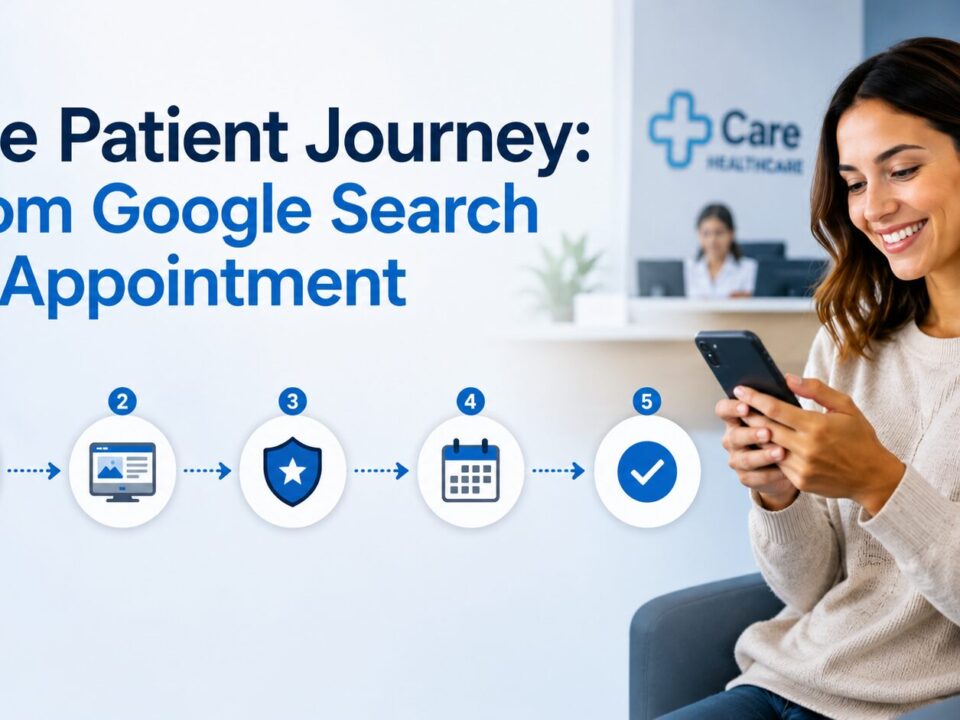
Understanding the modern patient journey allows healthcare practices to identify where they may be losing potential patients and what they can do to create a seamless path from online search to booked appointment.
1
The Google Search
The patient journey begins with intent.
Some patients have an urgent need, while others are researching symptoms or comparing providers. Google's goal is to present the most trustworthy and relevant options based on location, reputation, and website quality.
At this stage, patients are evaluating:
- Google Business Profile listings
- Map Pack rankings
- Star ratings and reviews
- Practice websites
- Office hours
- Services offered
- Location and convenience
If your practice doesn't appear prominently—or if your competitors look more credible—you may never have the opportunity to earn that patient's trust.
2
First Impressions Matter
Patients form an opinion about your practice within seconds.
Your Google Business Profile and website work together to create that first impression. Outdated photos, incomplete information, slow-loading pages, or confusing navigation can cause prospective patients to leave before learning what makes your practice unique.
A strong first impression includes:
- Professional branding
- Accurate contact information
- High-quality office and team photos
- Clear descriptions of services
- Mobile-friendly website design
- Fast page loading
- Easy navigation
Patients expect the same level of professionalism online that they'll experience in your office.
3
Building Trust Before They Contact You
Healthcare decisions are deeply personal. Before calling your office, patients want reassurance that they're making the right choice.
They often compare several practices and ask themselves:
- Does this provider have positive reviews?
- Does the website answer my questions?
- Are the providers experienced?
- Can I trust this practice?
- Will scheduling be easy?
Trust is built through many digital signals, including:
- Recent patient reviews
- Provider bios
- Professional credentials
- Educational blog articles
- Frequently asked questions
- Awards and certifications
- Testimonials and patient success stories
4
Finding the Right Information
Patients don't want to hunt for answers.
They expect to quickly find:
- Accepted insurance plans
- Conditions treated
- Available services
- Office location
- Phone number
- Online scheduling options
- New patient information
When this information is difficult to locate, patients frequently return to Google and select another provider.
A well-organized website anticipates patient questions before they're asked.
5
Scheduling the Appointment
This is the most critical conversion point.
After deciding your practice is the right fit, patients should be able to schedule an appointment with minimal effort.
Common barriers include:
- Long contact forms
- Broken scheduling links
- No online booking
- Slow response times
- Unclear next steps
Instead, practices should make scheduling effortless by offering:
- Online appointment requests
- Click-to-call buttons
- Mobile-friendly forms
- Text messaging options
- Fast response times
- Clear calls-to-action throughout the website
Every additional step creates friction that may cost you a new patient.
6
The Follow-Up Experience
This is the most critical conversion point.
After deciding your practice is the right fit, patients should be able to schedule an appointment with minimal effort.
Common barriers include:
- Long contact forms
- Broken scheduling links
- No online booking
- Slow response times
- Unclear next steps
Instead, practices should make scheduling effortless by offering:
- Online appointment requests
- Click-to-call buttons
- Mobile-friendly forms
- Text messaging options
- Fast response times
- Clear calls-to-action throughout the website
Every additional step creates friction that may cost you a new patient.
Where Many Practices Lose Patients
Many healthcare practices unknowingly lose prospective patients because of small digital issues that create unnecessary obstacles.
Common problems include:
- Poor Google visibility
- Low review volume
- Outdated websites
- Slow mobile performance
- Missing calls-to-action
- Inconsistent business information
- Lack of educational content
- No automated patient communication
Individually, these issues may seem minor. Collectively, they can significantly reduce appointment requests and patient growth.
Creating a Better Patient Journey
Improving the patient journey isn't about one marketing tactic—it's about creating a connected experience that guides patients naturally from search to appointment.
Successful practices invest in:
- Local SEO
- Google Business Profile optimization
- Modern website design
- High-quality content
- Online reputation management
- Marketing automation
Patient communication tools
Performance analytics
When these elements work together, patients experience fewer obstacles, greater confidence, and a smoother path to scheduling care.


One Platform Built for Modern Healthcare Practices
MVotion CRM centralizes patient communication, scheduling, and workflow automation into a single, easy-to-use system — fully branded for your practice.
No more chasing calls. No more missed messages. No more fragmented systems. We can help unify your practice.